가변적인 수를 Encoding하는 방법 중 하나인 Varints 형식을 알아보자.
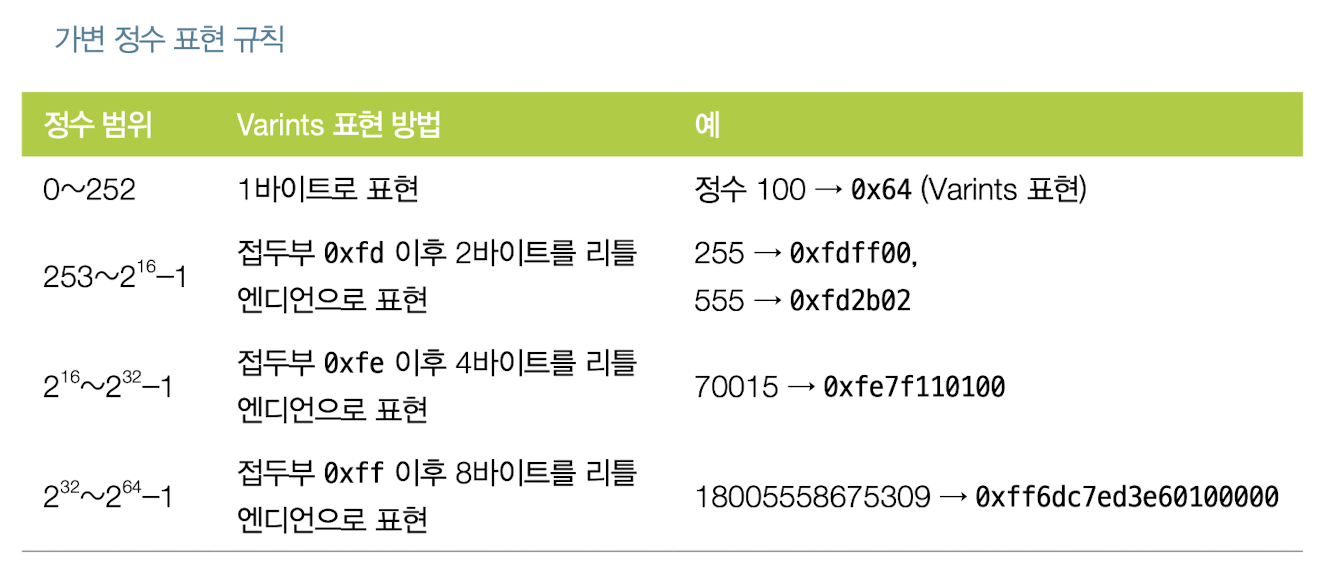
Varint
- 이전에 Input, output등의 개수를 나타낼 때 있어 varint 형식을 사용한다고 했었다.
- 여기서 간단하게 알아보자.
def read_varint(s):
    '''read_varint reads a variable integer from a stream'''
    i = s.read(1)[0]
    if i == 0xfd:
        # 0xfd means the next two bytes are the number
        return little_endian_to_int(s.read(2))
    elif i == 0xfe:
        # 0xfe means the next four bytes are the number
        return little_endian_to_int(s.read(4))
    elif i == 0xff:
        # 0xff means the next eight bytes are the number
        return little_endian_to_int(s.read(8))
    else:
        # anything else is just the integer
        return i

def encode_varint(i):
    '''encodes an integer as a varint'''
    if i < 0xfd:
        return bytes([i])
    elif i < 0x10000:
        return b'\xfd' + int_to_little_endian(i, 2)
    elif i < 0x100000000:
        return b'\xfe' + int_to_little_endian(i, 4)
    elif i < 0x10000000000000000:
        return b'\xff' + int_to_little_endian(i, 8)
    else:
        raise ValueError('integer too large: {}'.format(i))
댓글